I’ve written a lot about advertisements this semester, more than I thought I ever would. But a few weeks ago an ad for Red Lobster’s Lobsterfest caught my eye, and I knew I had to write something about it.

In case you weren’t aware, Lobsterfest is a yearly special that Red Lobster does where they offer a variety of lobster dishes for a limited time. This year, Lobsterfest started on Jan. 27. This year’s Lobsterfest dishes include Seaport Lobster and Shrimp, Lobster Alfredo, Lobster and Chips, New England Lobster and Seafood Bake, Surf and Turf and Ultimate Feast, the last of which includes lobster, crab, and shrimp. The promotion also includes two new cocktails: Strawberry Shoreline and Prickly Pear Margarita.
So, why does this matter, and why did a commercial for a restaurant I can’t afford to eat at serving a food I don’t like catch my attention? Well, because lobster used to be considered a peasant food, and I think it’s time we talked about that.
The History of Lobster
Back in the 1600s, residents of Massachusetts Bay Colony found that lobsters washed up on the beach in two-foot-high piles, according to an article by Pacific Standard. “People thought of them as trash food,” the article reads. In a letter by Plymouth Plantation Gov. William Bradford, he admits his shame that the only food they could “presente their friends with was a lobster…without bread or anyhting else but a cupp of fair water (original spelling preserved).” The Pacific Standard article also says that the Massachusetts colony was “forced to sign contracts promising that indentured servants wouldn’t be fed lobster more than three times a week.” A page on the official Maine website says they were also used as fertilizer, fish bait, and prison food.

Lobster continued to be a low-tier dish until the 1800s, when transportation managers at the head of the growing railway business realized that they could present the crustacean as a rare delicacy, even though it was cheap on the coast. Over the next 80 years, chefs realized that lobster was much better when cooked live, and restaurants started to serve it in the salad section.
Lobster was still viewed as “food for the poor” during the Great Depression, when poor families in Maine would sneak to the ocean to set lobster traps in order to feed their families. But during World War II, lobster wasn’t rationed, so people of all classes were able to eat it, leading to a boost in popularity. By 1950, lobster was widely known as the delicacy we know it as today. The average lobster dish at Red Lobster is over $20.

So there you have it — the expensive dish that started out as “trash food” is now being sold for outrageous prices. But could other “trash food” potentially make the same leap? Could we live in a world where consumers get hyped up for Spamfest? Well, some of the world already does.
Spamtown, USA

In Austin, Minnesota, known as “Spamtown, USA,” there exists a Spam Boulevard, a restaurant named “Johnny’s Spamarama,” and other Spam-based establishments with names like “Spam De’ Melt.” Austin is where George A. Hormel founded a slaughterhouse and meatpacking facility which, in 1937, began selling Spam. Hormel’s son, Jay, “set out to design a (canned pork lunch meat) product appropriate for home use by the consumer,” says an article from Eater. It wasn’t until World War II that Spam became known world-wide, when the U.S. military purchased a variety of canned meats, including Spam, to feed troops overseas.
Much like lobster, soldiers hated the food, and Hormel began keeping a “Scurrilous File” of hate mail from soldiers who were tired of the canned meat. However, in England and Asian Pacific countries, where Spam could survive tropical heat and sit on shelves for weeks at a time, the meat became a staple food. In Hawaii in particular, where government restrictions prevented the population from fishing, Spam took the place of other proteins. Spam still holds a place as a staple food in the Asian Pacific and Hawaii, which uses it for dishes like Spam musubi and Spam fried rice. (Since one of my friends is a Pacific Islander, I’ve had both, and as a picky eater I say, with no reservations, that properly cooked Spam is delicious.)

Though America is the world’s largest consumer of Spam, it’s still widely seen as a “trash food” for lower income families. Why? Possibly because of the processed nature of the meat, which is made from pork, water, salt, potato starch, sugar, and sodium nitrate. In 2020, America frowns upon processed foods and popularizes natural, healthy options.
In essence, the story of Spam is almost the opposite of the story of lobster. While lobster started as “trash” and became more popular as time went on, Spam started as a staple and stayed like that in some cultures while becoming “trash” in others. However, while lobster’s rise to fame was born from the conniving culture of capitalism (“if we make people think this food is worth something, they’ll pay more for it”), Spam’s legacy came more from availability and nostalgia.

More foods
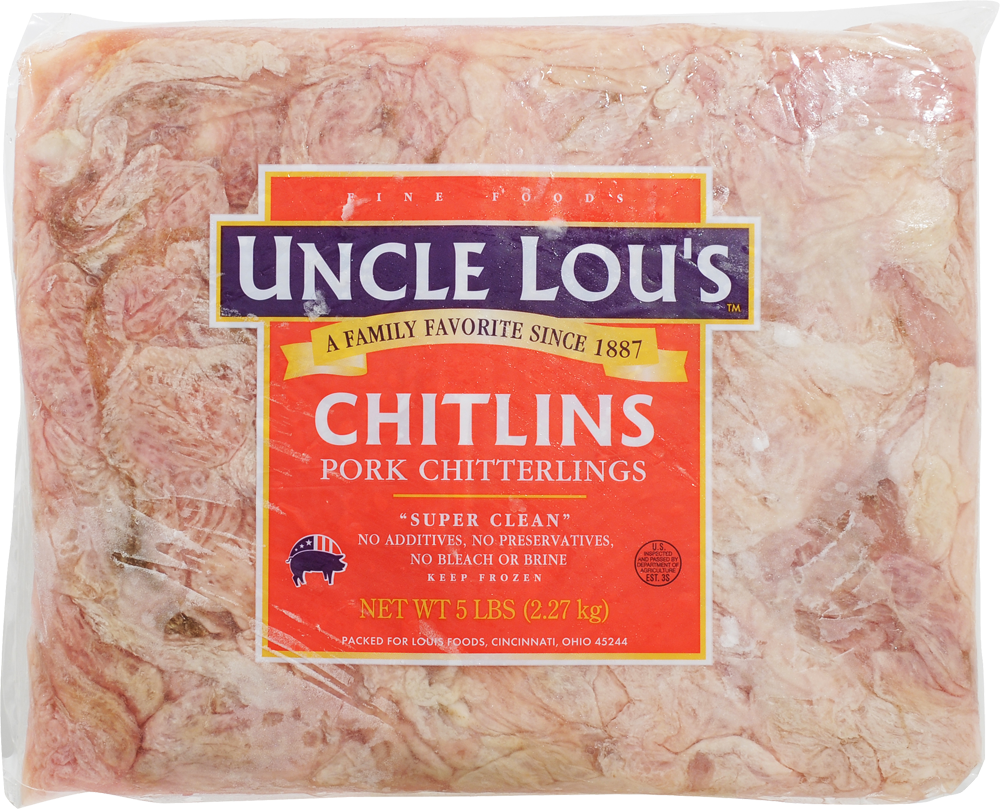
Another “unpopular food”, chitterlings, had a similar draw – as a food typically cooked by American slaves, it was an availability food, yet is still popular in older black communities as a nostalgia food. Today you can find bags of frozen chitterlings at local grocery stores, like Kroger. Unlike lobster or Spam, however, it’s not as much of a wide phenomenon.
Another example of the “if we make people think this food is worth something, they’ll pay more for it” scheme comes with potatoes. In 1774, King Frederick the Great of Prussia proposed the potato as a way to “feed his nation and lower the price of bread,” according to an article by Medium. Peasants initially resisted growing the tuber, saying that the potatoes “looked dirty and had no taste.” In response, King Frederick planted a royal field of potatoes and hired guards to protect the field, making it seem like a royal and valuable food. He then ordered said guards to be lax in their patrols and told them to accept all bribes, making it easy for peasants to steal the crops and grow their own potatoes. By artificially inflating the value of the potatoes, he made them seem like more of a “rich food” rather than a “trash food,” exactly like lobster. To this day, Germans still put potatoes on King Frederick’s gravestone, proof that the influence of his actions still lasts.

In conclusion
Clearly, the “if we make people think this food is worth something, they’ll pay more for it” scheme works. But is this a good thing? What are the implications of such a behavior? How much of what we think we enjoy comes from our own tastes, and how much of it comes from the societal rankings of “trash food” versus “rich food?” Hard to say. It reminds me of the classic “nature versus nurture” argument, and in regards to that I say it’s a mixture of both. Obviously, we cannot ignore the culture that surrounds us, but everyone’s taste buds are different and everyone has the capability of forming their own interests.
I think it’s interesting to look at this tactic and think about how we could possibly apply it to other things, and on that note I invite anyone reading this to utilize WordPress’ comment function. What “trash food” did you enjoy growing up? What are your opinions on foods like lobster, Spam, chitterlings and potatoes? What foods do you think the zeitgeist of the 2020s could bring to popularity if given the chance? I look forward to hearing your thoughts and opinions.
Categories: Opinion
Leave a Reply